
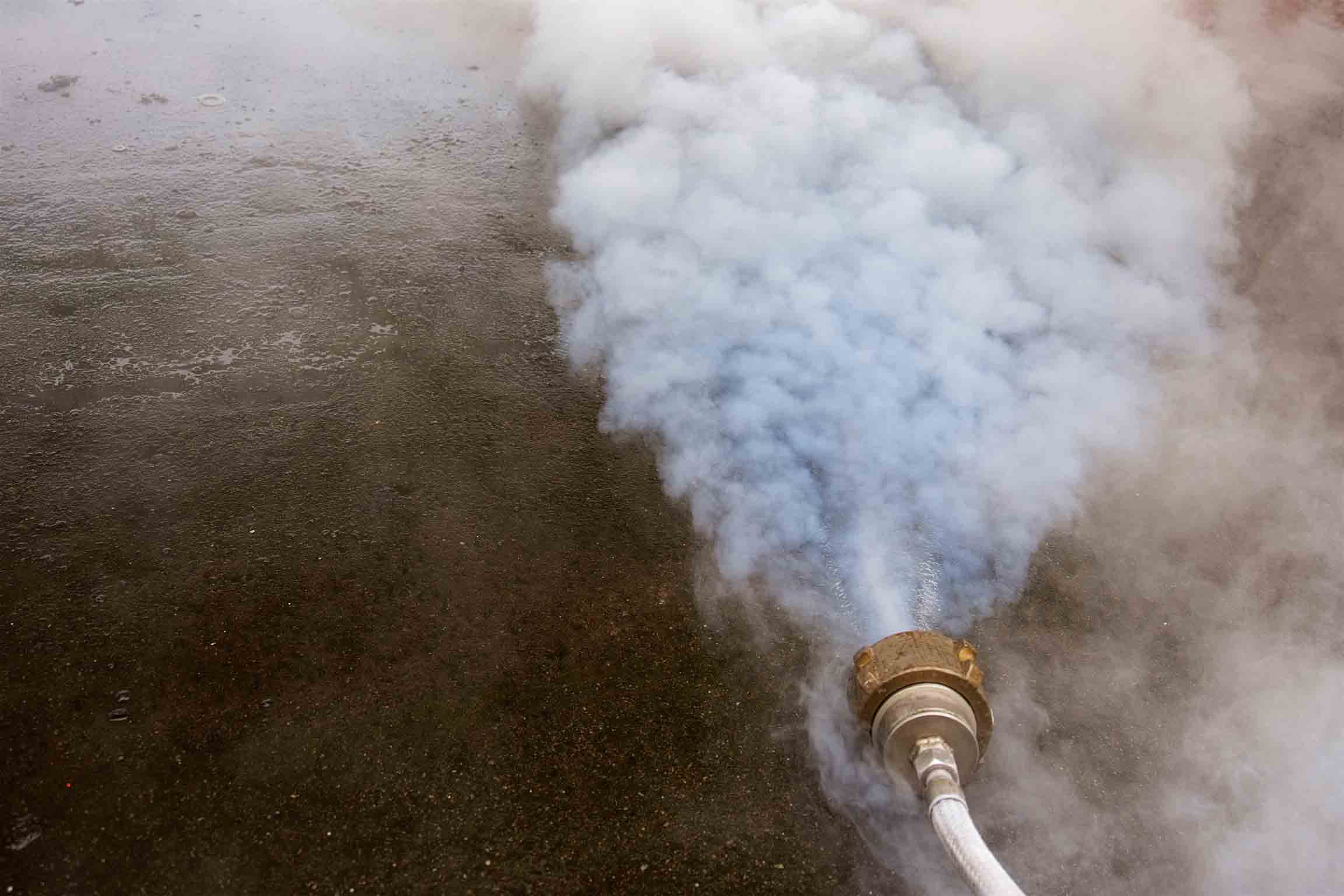
Inertization, also known as inerting or nitrogen purging, is the replacement of the vapor content of a cryogenic ISO tank container and its pipework with an inert gas, so that no flammable or reactive mixture is possible. Bofort carries out inertization as a standard preparation procedure, part of preparing its tank containers for maintenance, repair, or service, typically using dry nitrogen (N2) as the purging medium.
Three elements are needed to initiate and sustain combustion: an ignition source (heat), fuel and oxygen. Combustion is prevented by removing any one of these three elements. Inside a closed tank container an ignition source or oxygen content can only be ruled out completely through inertization by:
In practice, the tank vapor content is displaced by (dry) nitrogen. This brings the oxygen concentration below the combustion threshold before any flammable product is introduced.
At cryogenic temperatures inertization has a second purpose: purging with dry nitrogen removes moisture and CO2 before the tank is cooled down.
Bofort inertises the complete cargo system of its cryogenic ISO tank containers: the inner vessel together with its pipework and valves. The purge is continued until the atmosphere measured at the vent meets the oxygen content and dew point specified for the product to be loaded.
Bofort inertises the complete cargo system of its cryogenic ISO tank containers: the inner vessel together with its pipework and valves. The purge is continued until the atmosphere measured at the vent meets the oxygen content and dew point specified for the product to be loaded.
For non-flammable products such as nitrogen, oxygen, argon and CO₂ the same purging technique serves product purity and dryness rather than explosion prevention.
Dry nitrogen is the standard inerting gas for cryogenic tank containers: it is inert, moisture-free and readily available, and it remains gaseous at the temperatures involved. Argon and CO₂ are also inert, but CO₂ freezes to dry ice at cryogenic temperatures and argon is considerably more expensive, so neither is commonly used for this purpose.
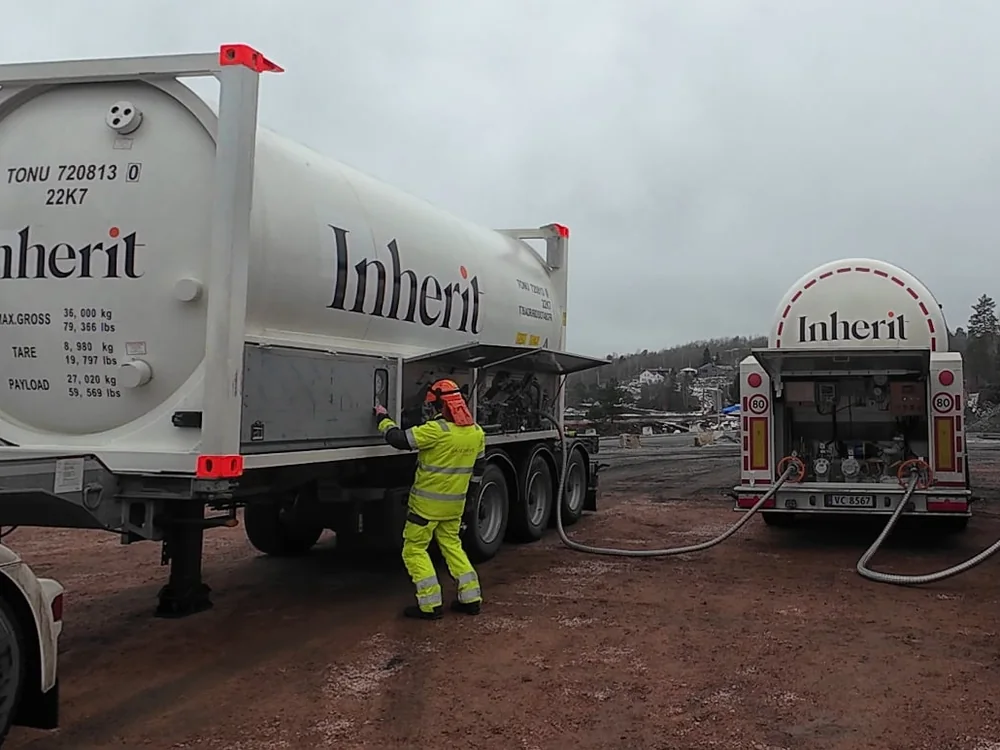
A nitrogen-inerted tank contains no breathable oxygen and will not sustain life. The inner vessel itself is not accessible, so there is no entry into the tank. The precaution that matters is outside it: nitrogen released during purging displaces oxygen in the surrounding air, so a safety zone is marked out around the tank in which the oxygen concentration can drop, resulting in a risk of asphyxiation.


Time in Antwerp